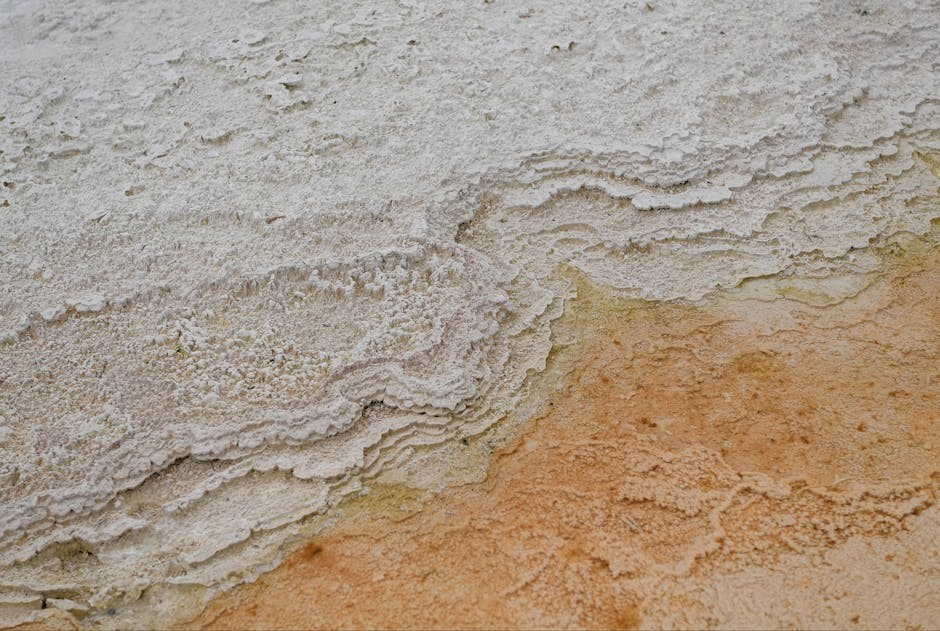
Embark on a fascinating journey into the world of geology, learning to discern the stories held within rocks and minerals! This guide provides essential knowledge,
pictures, and charts for successful rock, mineral, and crystal identification, perfect for enthusiasts and collectors alike.
Geologists study chemical elements, minerals, rocks, and geologic time, utilizing maps to understand Earth’s outer crust and the formation of landforms.
What are Rocks?
Rocks are the fundamental building blocks of our planet, forming the Earth’s solid outer layer and profoundly influencing landscapes. They are naturally occurring aggregates of minerals, much like a composite material, though some rocks can be composed of organic remains.
Understanding rocks is crucial as they reveal Earth’s history, providing insights into geological processes and past environments. These formations are categorized into three main types: igneous, sedimentary, and metamorphic, each formed through distinct processes.
Humans and all life depend on rocks for resources, construction materials, and understanding the planet’s dynamic nature. Studying rocks allows us to trace the evolution of Earth and the forces that continue to shape it, offering a glimpse into deep time.
What are Minerals?
Minerals are naturally occurring, inorganic solids with a defined chemical composition and a crystalline structure. Unlike rocks, which are aggregates, minerals are homogenous substances. They are the building blocks of rocks, and each mineral possesses unique physical properties that aid in identification.
These properties include color, streak, luster, hardness, cleavage, and specific gravity. Over 60 different mineral samples, representing 25 metallic and industrial types, are used for study. Identifying minerals requires careful observation and often, laboratory testing.
Minerals are essential resources, utilized in countless applications, from construction and manufacturing to electronics and medicine. Their study provides insights into Earth’s formation and the processes that create geological diversity.
Basic Properties for Identification
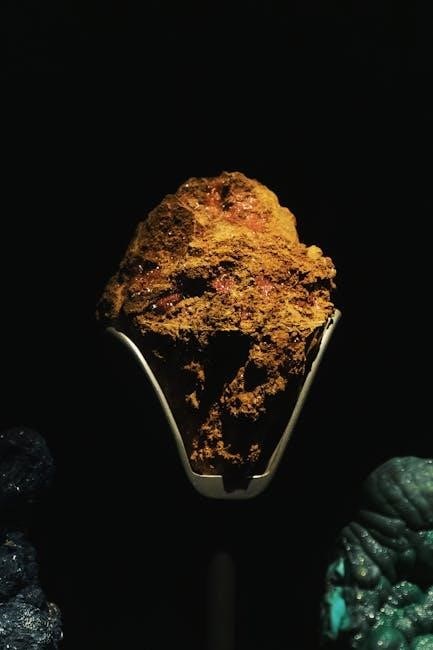
Unlocking identification relies on observing key characteristics: color, luster, hardness (using the Mohs scale), streak, magnetism, and specific gravity – essential tools for analysis!
Color and Streak
Color, while seemingly obvious, can be misleading in mineral identification due to impurities. Many minerals exhibit a range of colors, or even pleochroism (different colors when viewed from different angles). Therefore, relying solely on color is unreliable.
Streak, however, provides a more consistent clue. This refers to the color of a mineral in powdered form. To determine the streak, rub the mineral across a streak plate (unglazed porcelain). The streak color is often different from the mineral’s external color and is a more diagnostic property.
For example, hematite can appear black, brown, red, or silver, but always produces a reddish-brown streak. Observing both color and, crucially, streak, offers a more accurate initial assessment during rock and mineral identification.
Luster
Luster describes how light interacts with the surface of a mineral, offering a crucial identification characteristic. It’s not about color, but how the mineral reflects light. Geologists categorize luster into several main types.
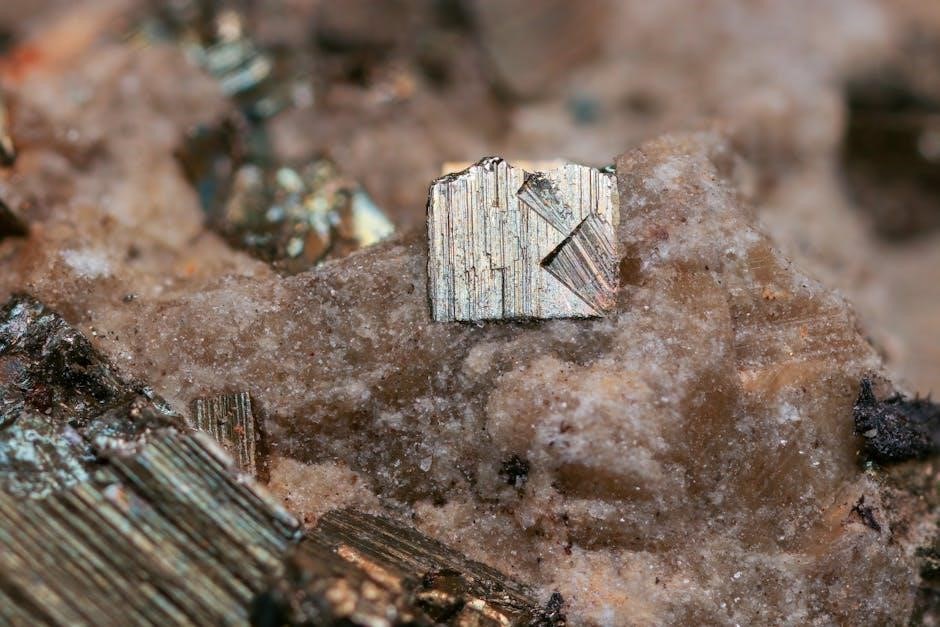
Metallic luster resembles polished metal – think pyrite (“fool’s gold”). Non-metallic luster encompasses several subtypes: vitreous (glassy, like quartz), pearly (iridescent, like talc), silky (fibrous appearance), resinous (like resin), and dull or earthy (lacking shine).
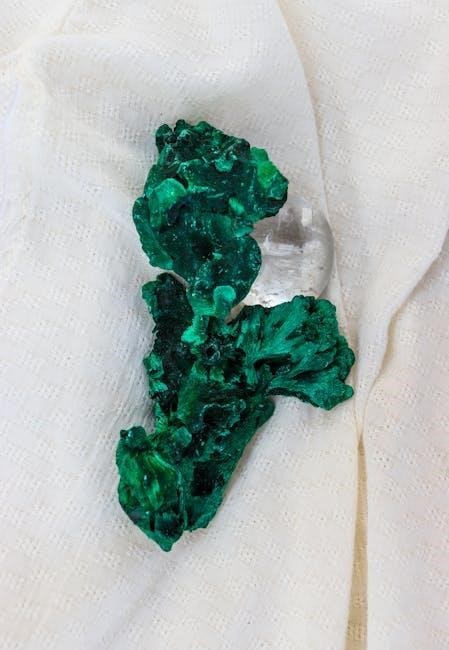
Careful observation of luster, combined with other properties, significantly narrows down potential mineral identifications. It’s a subjective assessment, but practice improves accuracy. Recognizing these distinctions is fundamental to effective rock and mineral analysis.
Hardness (Mohs Scale)
Mineral hardness, a key identifying property, measures resistance to scratching. The Mohs Hardness Scale, developed in 1812, ranks minerals from 1 (talc, very soft) to 10 (diamond, extremely hard). This isn’t a linear scale; a mineral of hardness 6 is not twice as hard as one of hardness 3.
Field identification often involves a scratch test: can the mineral scratch glass (hardness ~5.5)? Can it scratch a steel nail (hardness ~6.5)? Knowing common references helps. For example, your fingernail (~2.5) and a copper penny (~3.5) are useful tools.
Determining hardness aids in narrowing down possibilities, as each mineral possesses a characteristic resistance to abrasion. It’s a practical and relatively simple test for rock and mineral enthusiasts.
Key Mineral Groups
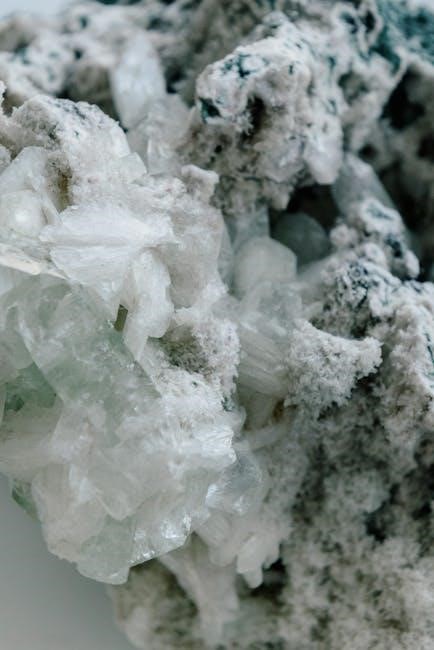
Minerals are categorized into groups based on their chemical composition. Silicates, carbonates, and oxides are prominent examples, each displaying unique characteristics and formation processes.
Silicates
Silicates represent the most abundant mineral group, constituting over 90% of Earth’s crust. Their fundamental structure involves silicon and oxygen, often combined with other elements like aluminum, magnesium, iron, calcium, and sodium. This diverse composition leads to a wide array of silicate minerals, each with distinct properties.
Common silicate minerals include feldspars, quartz, micas, amphiboles, and pyroxenes. Feldspars, for instance, are crucial components of many igneous and metamorphic rocks, while quartz is renowned for its hardness and clarity. Micas, easily identified by their sheet-like structure, contribute to the sparkle in granite and schist.
Identifying silicates often involves examining their crystal form, hardness, and cleavage. Understanding these characteristics is key to differentiating between various silicate minerals and unraveling the geological history of rock formations.
Carbonates
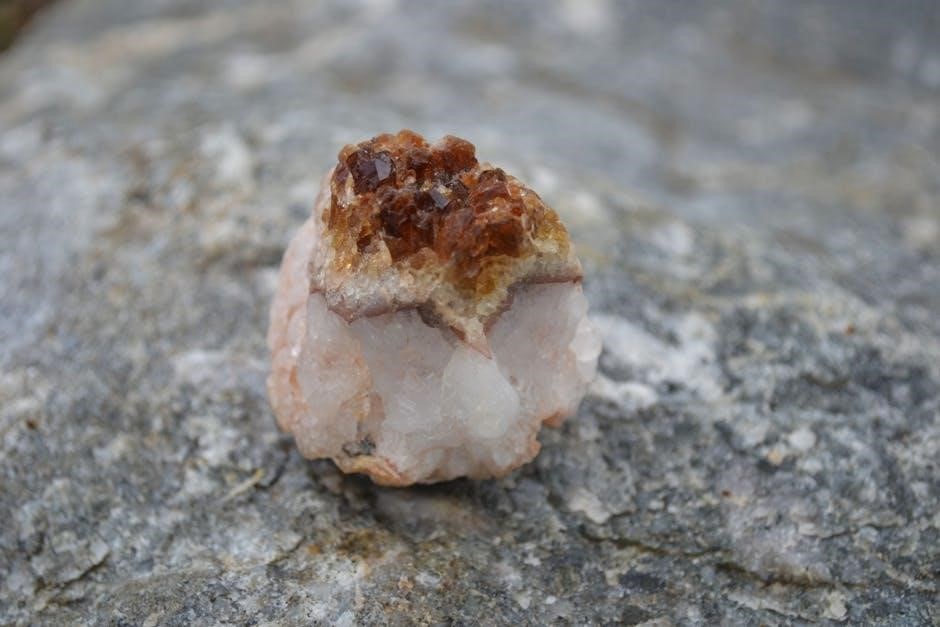
Carbonates are a significant mineral group characterized by the presence of the carbonate ion (CO32-). These minerals commonly form in sedimentary environments, often through the precipitation from water or the accumulation of marine organisms’ shells and skeletons.
Calcite and dolomite are the most prevalent carbonate minerals. Calcite, calcium carbonate (CaCO3), is a key component of limestone and marble, and famously reacts with dilute hydrochloric acid, producing effervescence. Dolomite, calcium magnesium carbonate (CaMg(CO3)2), is similar but less reactive.
Identifying carbonates is often straightforward due to their reaction with acid. Other identifying features include their relatively low hardness – easily scratched with a knife – and their crystalline structure. These minerals play a vital role in the carbon cycle and are essential for understanding Earth’s history and rock formations.
Oxides
Oxides constitute a diverse mineral group formed through the combination of oxygen with one or more metals. These minerals are crucial in understanding geological processes and are often economically important as sources of metals.
Hematite (Fe2O3), a primary iron ore, is a common oxide, recognized by its reddish-brown color and streak. Magnetite (Fe3O4) is another significant iron oxide, notable for its strong magnetic properties. Corundum (Al2O3) encompasses ruby and sapphire, prized gemstones known for their hardness.
Identifying oxides often involves assessing their color, streak, and hardness. Many oxides exhibit high densities and metallic lusters. Their formation occurs in various environments, including volcanic activity and weathering processes. Studying oxides provides insights into the Earth’s composition and the evolution of its crust.
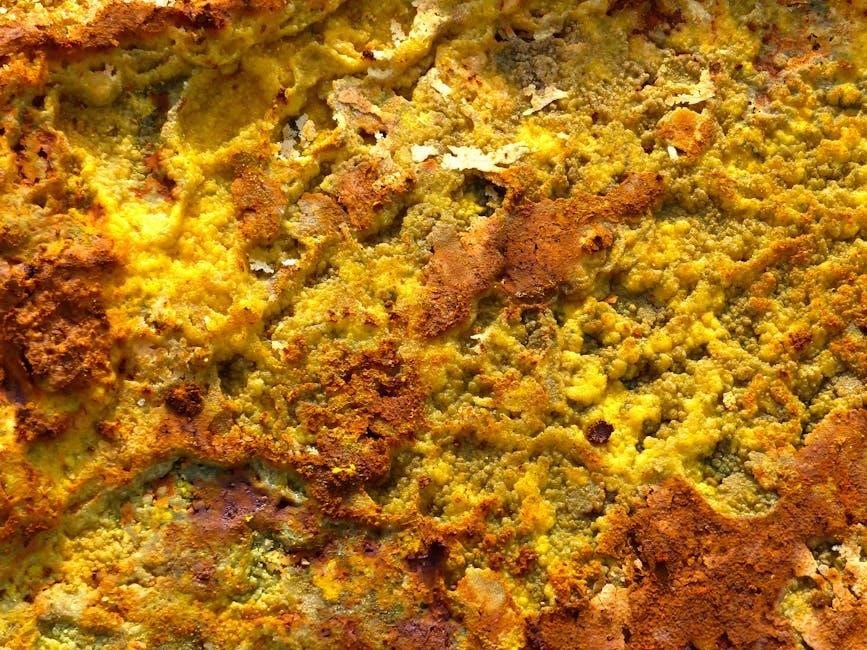
Identifying Common Rocks
Discover techniques to classify igneous, sedimentary, and metamorphic rocks, considering their origin, texture, and composition for accurate identification and geological understanding.
Igneous Rock Identification
Igneous rocks, born from cooled magma or lava, are categorized by their formation environment. Extrusive igneous rocks, like basalt and obsidian, cool rapidly on the surface, resulting in a fine-grained, aphanitic texture – often appearing glassy or with microscopic crystals.
Conversely, intrusive igneous rocks, such as granite and diorite, cool slowly beneath the Earth’s surface. This slower cooling allows for the development of larger, visible crystals, creating a coarse-grained, phaneritic texture. Identifying these rocks involves observing grain size, mineral composition, and overall color.
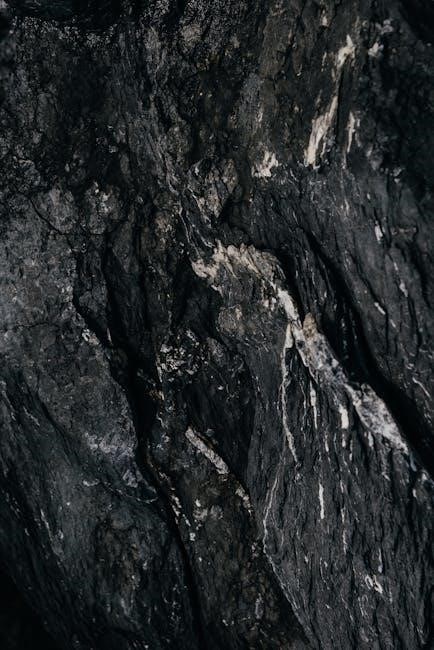
Consider whether the rock is metallic or not, and utilize an igneous rock identification chart to pinpoint the specific type based on these observed characteristics. Determining the rock’s origin – volcanic or plutonic – is a crucial step in the process.
Extrusive Igneous Rocks
Extrusive igneous rocks form from lava that cools quickly above Earth’s surface. This rapid cooling prevents large crystal growth, resulting in fine-grained textures – often described as aphanitic. Common examples include basalt, a dark-colored, dense rock frequently found in volcanic flows, and obsidian, a volcanic glass with a smooth, glassy texture.
Rhyolite, another extrusive rock, is similar in composition to granite but cools much faster, creating a fine-grained equivalent. Identifying these rocks often involves noting their color, texture, and the presence of vesicles (gas bubbles) formed during eruption.
Consider if the rock appears glassy or if it contains tiny, barely visible crystals. Utilizing an identification chart focused on extrusive rocks will aid in accurate classification.
Intrusive Igneous Rocks
Intrusive igneous rocks are formed when magma cools slowly beneath the Earth’s surface. This slow cooling process allows for the development of large, visible crystals, resulting in a coarse-grained texture – known as phaneritic. Granite is a classic example, easily recognized by its visible quartz, feldspar, and mica crystals.
Diorite, with its blend of dark and light minerals, and gabbro, a dark-colored, coarse-grained rock, are also common intrusive types. Identifying these rocks relies on carefully examining the size and composition of their constituent minerals.
Look for interlocking crystals and assess the proportions of different mineral components. An igneous rock identification chart specifically detailing intrusive rocks will prove invaluable for precise determination.
Sedimentary Rock Identification
Sedimentary rocks are formed from the accumulation and cementation of sediments – fragments of other rocks, minerals, or organic matter; Identification hinges on observing the rock’s texture and composition. Clastic sedimentary rocks, like sandstone and shale, are classified by grain size; sandstone feels gritty, while shale is fine-grained and often breaks into layers.
Chemical sedimentary rocks, such as limestone and rock salt, form from precipitated minerals. Limestone often reacts with acid, and rock salt has a distinctive salty taste. Observing features like layering (stratification), fossils, and the presence of rounded grains can provide clues to the rock’s origin.
Utilize a rock identification guide focusing on sedimentary structures to accurately classify these fascinating rocks.
Metamorphic Rock Identification
Metamorphic rocks arise from the transformation of existing rocks – igneous, sedimentary, or even other metamorphic rocks – through heat, pressure, or chemically active fluids. Identifying them requires observing texture and mineral composition, often displaying a foliated or non-foliated structure.
Foliated rocks, like slate and gneiss, exhibit a layered or banded appearance due to the alignment of minerals under pressure. Non-foliated rocks, such as marble and quartzite, lack this layering. Marble forms from limestone and often displays interlocking calcite crystals, while quartzite is very hard and forms from sandstone.
Careful examination of grain size, mineral alignment, and the presence of specific minerals are crucial for accurate identification using a comprehensive rock and mineral guide.
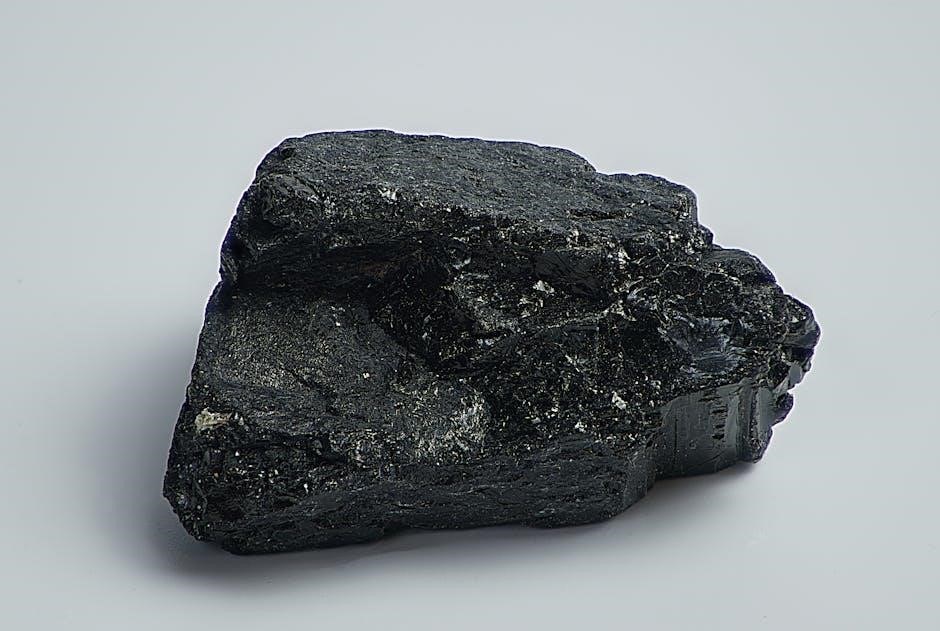
Using Identification Charts
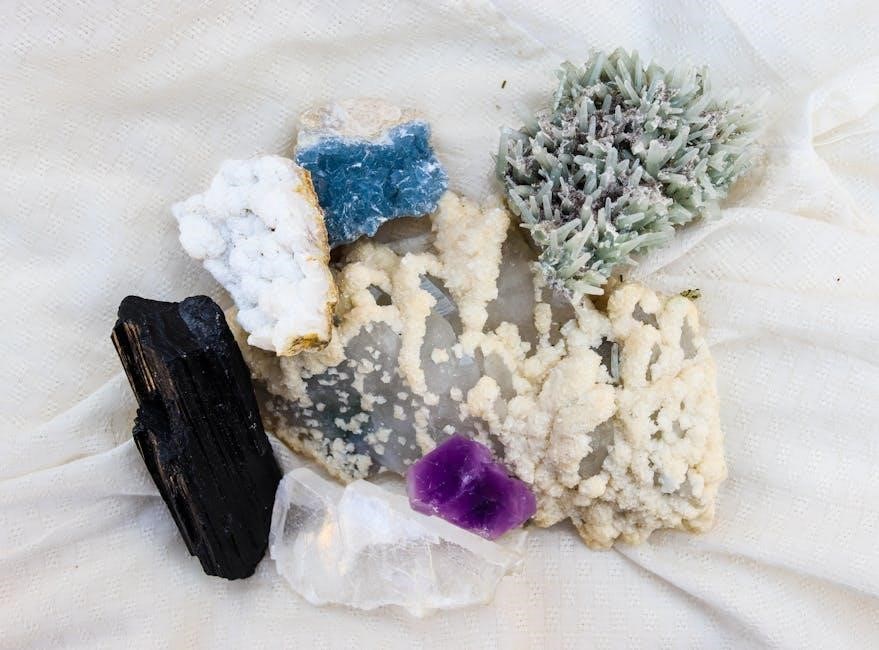
Unlock the secrets of geology with expertly designed charts! These visual tools simplify rock and mineral identification, aiding enthusiasts in cataloging and understanding specimens;
Understanding Rock and Mineral Charts
Rock and mineral charts are invaluable tools, systematically organizing properties for easy identification. These charts typically list minerals based on characteristics like hardness – measured using the Mohs scale – alongside details on crystal structure, color variations, and luster.
Cleavage, describing how a mineral breaks, is also a key feature. Charts often include visual aids, showcasing different crystal habits and cleavage planes. For rocks, charts categorize them by origin – igneous, sedimentary, or metamorphic – and detail their composition and texture.
Understanding terms like ‘aphanitic’ (fine-grained) and recognizing the presence of specific minerals within a rock are crucial. Charts help correlate observed features with established classifications, enabling accurate identification and fostering a deeper appreciation for geological formations.
Creating a Personal Rock and Mineral Catalog
Building a personal catalog transforms your collection from specimens into a documented study. Begin with detailed photographs of each rock and mineral, capturing key features like color, texture, and crystal form. Record the location where the sample was found or purchased, adding context to its origin.
Include purchase information if applicable, and create personal notes detailing any unique observations or interesting facts. Assign a rarity level based on your research, enhancing the catalog’s scientific value.
Consider a digital format for easy organization and searchability. This allows for quick access to information and facilitates sharing with fellow enthusiasts. A well-maintained catalog elevates your hobby, fostering deeper learning and preserving your geological discoveries for years to come.
Advanced Identification Techniques
Refine your skills by exploring specific gravity and magnetic properties! Determining these characteristics, alongside hardness tests, unlocks deeper insights into rock and mineral composition.
Specific Gravity
Specific gravity represents the ratio of a substance’s density to the density of water, offering a valuable, albeit less commonly used, identification technique. It essentially reveals how many times heavier a mineral or rock is compared to an equal volume of water.
Determining specific gravity requires careful measurement. Typically, a mineral sample is weighed in air, then weighed again while fully submerged in water. The difference in weight, combined with the initial weight, allows for calculation of the specific gravity.
This property is particularly useful when dealing with minerals that appear similar in color and luster, as specific gravity can provide a distinguishing factor. While not always definitive on its own, it adds another layer of precision to the identification process, complementing other observational methods.
Magnetic Properties
Magnetic properties offer a straightforward, yet insightful, method for initial rock and mineral identification. Certain minerals contain iron, a key element responsible for magnetism. Testing for magnetism is simple: observe whether a mineral sample is attracted to a magnet.
However, magnetism isn’t always a clear indicator. Some minerals exhibit strong magnetism, like magnetite, while others display only weak attraction or none at all. Furthermore, the presence of magnetic minerals within a rock doesn’t automatically classify the entire rock as magnetic.
Asking “Is this rock magnetic?” is a crucial step in the identification process. Observing magnetic behavior, or lack thereof, narrows down possibilities and guides further investigation using other properties and identification charts.